
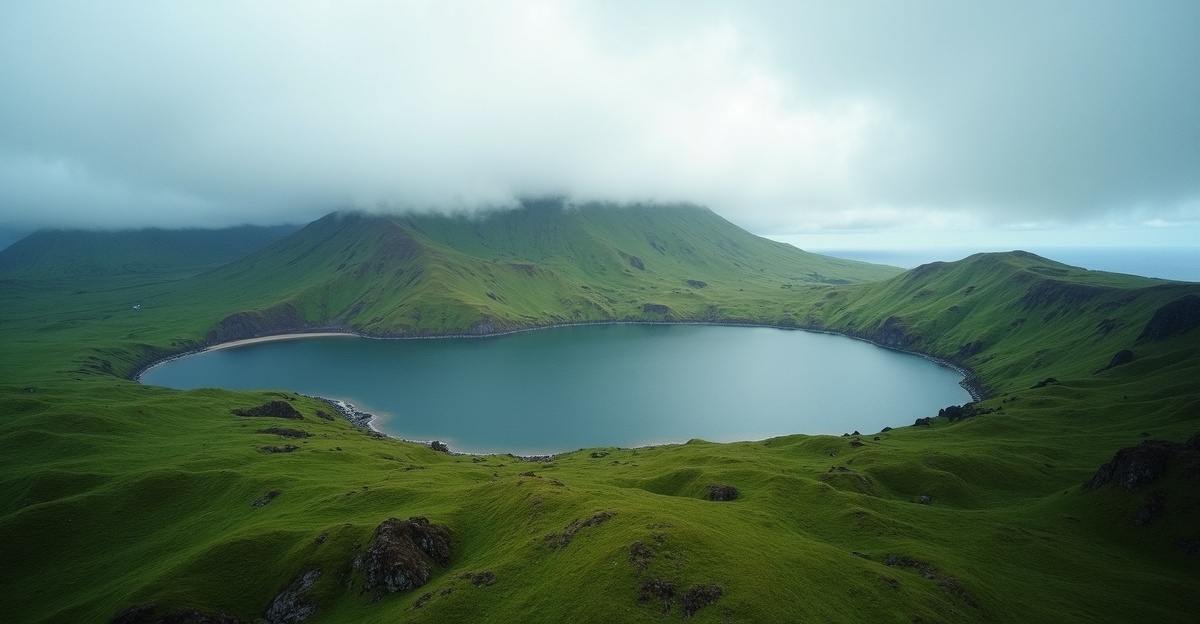
I took the wrong flight the first time I went to the Azores. Or rather, I made the mistake of looking down as we descended into Ponta Delgada and seeing São Miguel for the first time from the air: the green — impossibly, almost aggressively green — and then the ocean, very blue, very large, and then the island sitting in it like something that shouldn’t exist this far from anywhere.
The Azores are 1,500 kilometres from mainland Portugal. They are closer to North America than to Africa. They sit on a volcanic hotspot where three tectonic plates meet. The landscape is the consequence: calderas, crater lakes, thermal springs, dramatic coastline, and an Atlantic climate that produces the greenness from the air — constant mild rainfall, moderate temperatures, and the persistent sense that the landscape is more alive than landscapes normally are.
No package holiday quite prepares you for this. The brochure version makes them look like a mild Atlantic alternative to the Canaries. They’re something completely different.
BLOCK_0
What the Azores Are and Why They’re Worth Understanding
The Azores archipelago consists of nine islands spread across 600km of open Atlantic, organised into three groups: the Eastern Group (São Miguel and Santa Maria), the Central Group (Terceira, Graciosa, São Jorge, Pico, and Faial), and the Western Group (Flores and Corvo). The islands were uninhabited when Portuguese sailors arrived in the 15th century; they’re now home to approximately 240,000 people, are an autonomous region of Portugal, and use the euro.
Each island is geologically distinct. São Miguel has crater lakes and active thermal areas. Pico has the highest mountain in Portugal (Mount Pico, 2,351m). Flores has waterfalls dropping directly into the Atlantic. Corvo — the smallest inhabited island in the EU — has a single caldera and fewer than 400 residents.
Understanding this before you book changes your planning entirely. The Azores are not a beach destination, though they have beaches. They’re not primarily a relaxation destination, though they can be. They’re a nature and activity destination unlike almost anything else in Europe — volcanic, dramatic, and genuinely remote.
The Islands: Which Ones to Visit
São Miguel: The Most Accessible and Most Visited
São Miguel is where most Azores visitors start and, for a single-island trip, where you should go. It’s the largest island, with the most developed tourist infrastructure, the most varied landscape, and the most accessible flight connections from Lisbon and direct from several European cities.
The main attractions:
Sete Cidades: a twin-lake caldera in the western part of the island, divided into a green lake and a blue lake by a narrow bridge. The standard view is from the Vista do Rei mirador above the caldera rim — genuinely spectacular. For more, hike down into the caldera and walk between the lakes.
Furnas: the geothermal valley in the east of the island. The valley floor is punctuated by boiling mud pools, steam vents, and thermal springs — a surreal landscape that looks like it might belong on Iceland. The thermal baths at Caldeira Velha and the Terra Nostra Garden (a botanical garden with a large iron-orange thermal pool you can swim in) are both worth the drive.
Lagoa do Fogo: a volcanic crater lake in the centre of the island, accessible by a short but steep hike. Less visited than Sete Cidades, more wild, no commercial infrastructure.
Ponta Delgada: the archipelago’s largest city and the main urban base. The historic centre — black basalt churches, azulejo-covered townhouses, the waterfront city gates — is worth at least half a day. The market (Mercado da Graça) is the best food shopping in the archipelago.
Whale watching from São Miguel: the island has active whale watching operators, though the best cetacean experience in the archipelago is from Pico (see below).
For São Miguel alone, a minimum of four days is realistic to see the main sights without rushing. Five or six days is comfortable.
Pico and Faial: The Volcanic Pair
Pico and Faial are the most dramatic pairing in the archipelago — 8km apart across a strait, geologically different, complementary in what they offer.
Pico is dominated by Mount Pico, the perfectly formed volcanic cone visible from Faial and from the sea approaching from any direction. Climbing it is a half-day undertaking that requires a guide by regulation and pays off with views across the entire central group (on clear days). The island also produces the Azores’ most interesting wine: Pico wine, made from Verdelho vines grown in lava rock enclosures (currais) right at the sea’s edge — a UNESCO-recognised cultural landscape that is also genuinely delicious wine.
Pico is also the best island for whale watching in the archipelago. The deep waters immediately off the island’s coast produce reliable sightings of sperm whales year-round, and dolphin encounters on nearly every trip. The operators based in Lajes do Pico are among the most professional and well-equipped in the Atlantic; they use vigia (lookout posts on the high ground) to locate whales before the boats depart.
Faial is the sailing capital of the Azores — the marina in Horta has been a transatlantic sailing waypoint for decades, and the tradition of sailors painting murals on the harbour walls before crossing to or from the Americas has created one of the strangest and most distinctive artworks in the world. The Caldeira — a 2km-wide caldera at the island’s centre, accessed by a circular trail — is one of the best short hikes in the archipelago.
The Pico-Faial combination works well as a 4-5 day addition to a São Miguel trip. Ferries run between them frequently; staying a night on each is better than day-tripping.
Terceira: History and Heritage
Terceira is the most historically significant island in the archipelago — Angra do Heroísmo, its capital, is a UNESCO World Heritage Site, one of the best-preserved examples of 16th-century Portuguese colonial urbanism in the world. The waterfront, the hilltop forts, the street grid, the azulejo-covered churches — this is the most architectural of the Azores islands.
Terceira also has its own geothermal feature: the Algar do Carvão, a lava tube large enough to walk into, with a small lake at the bottom. The Serreta area on the northwest coast was the site of an underwater volcanic eruption in the 1990s — the remains are visible in the coastal landscape.
For first-time visitors, Terceira is best as a day trip from São Miguel (cheap inter-island flights, 30 minutes) or as a stop on a multi-island itinerary.
Flores and Corvo: The Western Group
Flores is the most visually dramatic of the Azores islands — seven crater lakes, multiple waterfalls falling directly into the sea, and a landscape so green it seems impossible. The island gets more rainfall than any other in the archipelago, which explains both the greenness and the relative lack of visitors (weather can close for days at a time).
Corvo is 17km north of Flores, 17km² in total area, with a single caldera (Caldeirão) accessible by jeep track and a single village. It is the smallest inhabited island in the European Union. Going there is an exercise in deliberate remoteness.
The western group is for travellers who specifically want to get away from everything. The tourist infrastructure is minimal; the experience is genuine.
São Jorge, Graciosa, Santa Maria
São Jorge is a long narrow island with dramatic cliffs (the fajas — flat platforms at the base of sea cliffs formed by ancient lava flows) where small communities continue to farm and fish in traditional ways. The most unusual landscape in the archipelago, arguably.
Graciosa is the flattest, driest, and calmest of the islands — a pleasant contrast to the dramatic topography everywhere else. The Furna do Enxofre, a large lava tube with a thermal lake inside, is the main geological feature.
Santa Maria is the southernmost island, with the best weather in the archipelago (drier, warmer) and some of the Azores’ best beaches. The Santa Maria Music Festival in August is among Portugal’s best outdoor music events.
Azores Vacation Package Options: What to Know
The Standard Package: São Miguel Only
Most Azores package holidays are São Miguel only — flight and hotel, sometimes with transfers and one or two excursions included. These work well if you want a straightforward introduction and aren’t yet sure about multi-island travel.
What to check before booking:
– Location of the hotel: staying in or close to Ponta Delgada city centre gives you flexibility. Countryside hotel packages often require a hire car.
– Included excursions: Sete Cidades and Furnas tours are the standard inclusions. They’re the right ones.
– Season: May-June and September-October are the best months — fewer crowds than July-August, reliably better weather than winter.
Island-Hopping Packages
Island-hopping packages combining São Miguel with Pico, Faial, and/or Terceira are available from specialist operators. The logistics are handled: inter-island flights or ferries, accommodation on each island, itinerary.
The advantage of a specialist package for island hopping is that the coordination is handled — inter-island transport has its own complications and the better operators have learned which combinations work within given time frames.
For 10-14 day trips: São Miguel (4 days) + Faial (2 days) + Pico (3 days) + Terceira (2 days) is a well-balanced itinerary. The Faial-Pico combination is the highlight.
Independent vs Package for the Azores
The Azores are significantly more manageable independently than most Atlantic island destinations:
– Inter-island flights (SATA Air Azores) are cheap and frequent within the archipelago
– Ferry services connect the central group islands regularly
– Hire car is the right way to explore each island — public transport is limited
– English is widely spoken
A self-planned trip using separate flight booking, accommodation, and hire car will almost always be cheaper than a package and gives more flexibility. The only cases where a specialist package adds genuine value:
1. Multi-island itineraries with complex logistics
2. Activity-specific holidays (whale watching, diving, hiking) where operator quality matters and the specialist has vetted the providers
When to Go to the Azores
The Azores climate is genuinely mild year-round: average temperatures range from 14°C in winter to 24°C in summer. Rain is possible in any month, but:
May-June: excellent — spring wildflowers, hydrangea hedgerows in bloom (the blue hydrangea marking the field boundaries is one of the Azores’ most characteristic images), good whale watching, pre-summer crowd levels.
July-August: peak season — more crowded, higher prices, reliably better weather but not dramatically so. Book well in advance.
September-October: arguably the best compromise — end-of-summer warmth, reduced crowds, excellent whale watching (blue whale sightings more common in autumn), lower prices.
November-April: quieter, greener, cheaper, with more chance of weather disruptions. Some smaller hotels close. If you want the most dramatic landscapes with no other tourists, this works.
Practical Azores Travel Information
Getting there: SATA Air Azores and Ryanair fly from Lisbon to Ponta Delgada (São Miguel) in about 2 hours. TAP and Ryanair operate seasonal direct routes from several European cities. Terceira (Lajes airport) also has mainland connections.
Getting around: hire car on each island is essential. Roads are good; distances are short. Driving a full loop of São Miguel takes about 3 hours without stops.
Money: euro is the currency. Card payment is accepted almost everywhere, but keep cash for the smaller cafés in village areas.
Language: Portuguese, but English is widely spoken in tourist areas and by younger locals throughout the islands.
Accommodation: ranges from large resort hotels in Ponta Delgada to small quinta-style rural accommodation (the turismo rural options are often the most interesting — traditional farmhouses in the interior). Book well in advance for July-August.
BLOCK_1
Frequently Asked Questions About Azores Vacation Packages
Which Azores island is best for a first visit?
São Miguel is the right first island for most visitors — the largest, most varied, with the best transport connections and the most complete tourist infrastructure. The crater lakes (Sete Cidades), thermal valley (Furnas), and accessible coastal scenery give you a good overview of what the Azores are. For a first trip, four to six days on São Miguel alone is a sensible plan. If you have 10+ days, combining São Miguel with Pico and Faial adds the archipelago’s best whale watching and most dramatic volcanic scenery.
What is the best time of year to visit the Azores?
May-June and September-October are the best months: good weather, fewer crowds than peak summer, and excellent whale watching conditions. July-August is peak season — more crowded, higher prices, but reliably warm. The Azores are visitable year-round (the climate is mild) but winter months bring more weather disruptions, particularly for inter-island travel.
Is whale watching in the Azores worth it?
Yes — the Azores are one of the world’s best whale watching destinations. The deep Atlantic waters around the islands support year-round sperm whale populations plus seasonal visits from blue whales, fin whales, sei whales, and multiple dolphin species. The best whale watching is from Pico Island, where the vigia (lookout) system locates animals before the boat departs. Encounter rates are among the highest in the Atlantic. The experience is significantly different from whale watching in colder or shallower-water destinations.
How many days do you need in the Azores?
For São Miguel alone: 4-6 days is the right range — enough to see the main crater lakes, thermal valley, and coastal scenery without rushing. For a multi-island trip including Pico and Faial: add 4-5 days minimum. A 10-14 day trip covering São Miguel, Faial, Pico, and Terceira gives a thorough overview of what the archipelago offers. Less than 4 days on any single island means you’re seeing it too quickly.
Are the Azores expensive to visit?
The Azores are moderately priced relative to other European island destinations. Accommodation ranges from €40-80 for mid-range guesthouses to €120-200+ for quality hotels. Restaurants are good value — a full meal with local wine in a Ponta Delgada restaurant is €20-30 per person. Hire car is an additional €30-50 per day. Inter-island flights within the archipelago cost €30-80 depending on route and booking timing. Overall, a week in the Azores is significantly cheaper than equivalent quality travel in the Canaries, Madeira, or southern mainland Portugal in peak season.
BLOCK_2
BLOCK_3
BLOCK_4