
I found Caminha by accident, the way you find the best places in Portugal — by stopping on a drive north toward Spain when a church tower appeared above the trees on the wrong side of the road to be the motorway services.
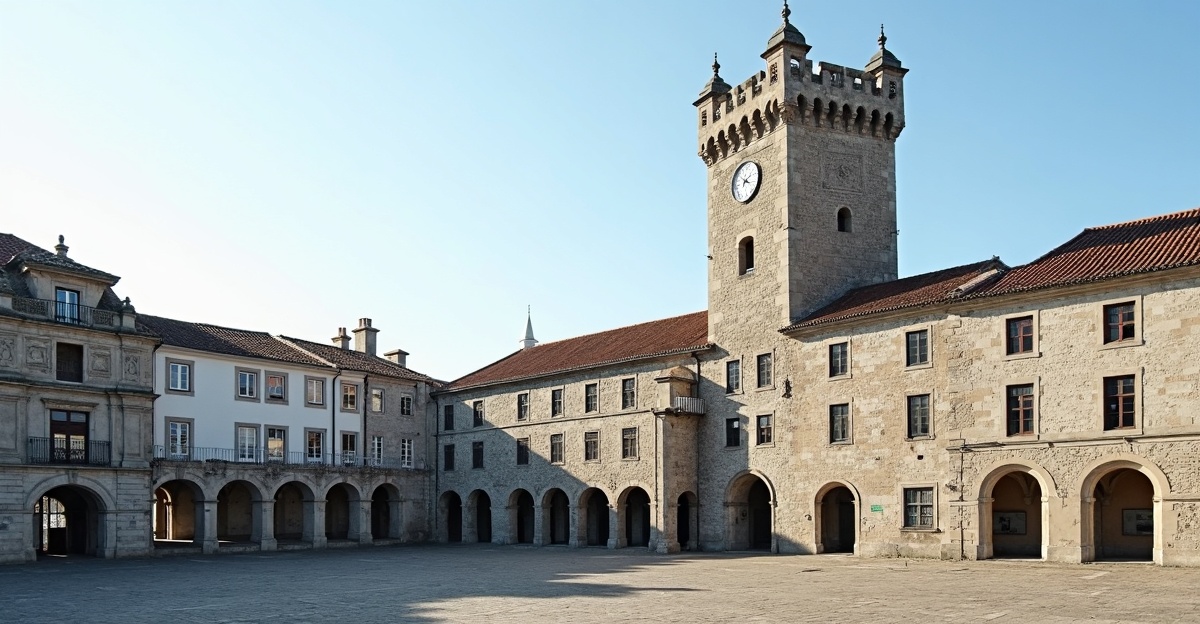
The square I walked into was one of the best in northern Portugal: compact, granite-paved, flanked by a 15th-century clock tower, a Gothic church with Manueline detailing, a loggia arcade, and a central fountain. Three old men on a bench. Two cafés with tables outside. Nobody looking at their phone. It was eleven in the morning and the light was doing that particular thing it does in the north of Portugal in spring — flat and clear and silver, everything slightly more itself than usual.
I had planned to stop for twenty minutes. I stayed two nights.
BLOCK_0
What Caminha Is
Caminha is a small town (population approximately 16,000 in the wider municipality) in the extreme northwest of Portugal, in the Viana do Castelo district. It sits at the estuary of the Minho River — the river that forms the border between Portugal and Spain for much of its length — where the river meets the Atlantic.
The river crossing to Galicia is just a few hundred metres wide here. On a clear day, the buildings of A Guarda on the Spanish side are clearly visible from Caminha’s riverside esplanade. A small foot passenger ferry crosses several times a day.
The town is encircled by the remnants of its medieval walls, with the original gates still standing. The historic centre inside these walls — the medieval square, the church, the old houses — is largely intact and largely unaltered by tourism. Caminha gets a steady summer season but remains genuinely unhurried for most of the year.
The Medieval Square
The Praça do Conselheiro Silva Torres is the town’s heart and its best feature. The square is framed by:
Torre do Relógio: the clock tower, built in the 15th century, which formed part of the original town gate. The square arch at its base was the main entrance from the river dock, and wagons and carts passed through here for centuries.
Igreja Matriz de Caminha: the parish church, built in the late 15th and early 16th century, with a Gothic portal and interior vaulting of genuine quality. The church took decades to build as Portugal’s Age of Discovery was transforming the country’s wealth — the quality of the stonework reflects that period. Inside, the wooden coffered ceiling (artesonado style, Moorish-influenced) is unusual and excellent.
Paço do Concelho: the old town hall loggia, a Renaissance arcade from the 16th century, now housing the local library. The ground-floor arches are the defining element of the square’s west side.
The square is not a museum or a tourist set piece. It’s a functioning town square: people cross it on their way to work, children cut through it on bicycles, the cafés along the edge do ordinary trade. This ordinariness is precisely what makes it excellent.
The Minho Estuary and the River Walk
The riverside esplanade north of the old town is Caminha’s outdoor living room. A well-maintained promenade runs along the Minho estuary, with views across to Galicia, benches for watching the tidal movement, and fishing boats moored at the small quay.
The estuary is a significant wildlife area — the Minho is one of the last relatively unmodified large rivers in Iberia, and the lower estuary around Caminha has important wetland and migratory bird habitats. Birdwatchers working the northern Portuguese coast often base themselves in Caminha for access to the estuary and the nearby coastal areas.
The promenade connects south to the town beach (Praia de Caminha) — a long, Atlantic-facing sandy beach accessed by crossing the old railway bridge. The beach faces northwest and catches Atlantic swell; it’s popular for surfing and bodyboarding.
The Ferry to Spain
The passenger ferry from Caminha to A Guarda in Galicia is a practical and pleasant crossing. It runs multiple times daily in season (reduced schedule in winter); the crossing takes about 10 minutes. From A Guarda, the Santa Trega hillfort and Galician seafood are the main attractions.
This is the northernmost crossing point on the Minho border — above here, the next crossing is by bridge at Valença/Tui, 25km upstream. For travellers moving between the Portuguese Minho and Galicia on foot or by bicycle, the Caminha ferry is a useful crossing.
What to Eat in Caminha
Caminha’s food scene is rooted in the Minho tradition: seafood from the Atlantic and the estuary, green wine (vinho verde), and the conservative, honest cooking that characterises northern Portugal.
Lamprey (lampreia): Caminha is one of the best places in Portugal to eat lamprey, the jawless fish that migrates up the Minho in late winter and early spring (February-April is the season). Lamprey in the Minho style is stewed in its own blood with wine and vegetables — a dish that sounds challenging and tastes extraordinary. It’s a regional specialty that you’re unlikely to find outside this northern river-estuary zone.
River fish: salmon, shad (sável), and sea trout from the Minho estuary. The smaller restaurants near the river serve these when in season.
Arroz de sarrabulho: a pork rice dish from the Minho tradition, substantial and satisfying, made with offal, pork blood, and spiced with cumin. A long way from tourist food.
Vinho verde — the naturally sparkling, slightly acidic young wine of the Minho region — is the correct accompaniment to all of the above. In Caminha you’re in the middle of the production zone; a carafe of local house vinho verde in any restaurant here is what the wine is supposed to be.
Day Trips from Caminha
Viana do Castelo (25km south): the most significant city in the Minho north of Braga, with an excellent main square, a pilgrimage church on the hill above the city (Santa Luzia), and the best selection of traditional Minho gold filigree jewellery outside Porto. Reachable by train from Caminha in 35 minutes.
Valença (30km east): the border fortress town on the Minho, one of the finest preserved Vauban-style fortifications in Portugal. The weekly market inside the fortress walls draws Spaniards from Tui on the other bank. Excellent viewpoint over the river.
Parque Nacional Peneda-Gerês (50km east): Portugal’s only national park, with granite moorland, river valleys, and the distinctive communal granaries (espigueiros) of the Minho village tradition. Day trip from Caminha is possible; the park deserves more time.
Moledo and Praia de Moledo: the beach south of Caminha, calmer and better for swimming than the main Caminha beach, with the Ínsua fortress island visible offshore.
When to Visit Caminha
Spring (April-June): the best time for the historic centre — warm enough to sit outside, quiet enough to appreciate the square in peace, green landscape from the Minho winters. Lamprey season in February-April.
Summer (July-August): busier with Portuguese summer visitors; the beach is the main draw. The square is still worth the visit; the restaurants are at full capacity.
Autumn (September-October): my preferred time — the summer visitors have gone, the weather remains mild, and the northern light is exceptional.
BLOCK_1
Frequently Asked Questions About Caminha Portugal
Where exactly is Caminha in Portugal?
Caminha is in the extreme northwest of Portugal, in the Viana do Castelo district of the Minho region. It sits at the mouth of the Minho River, where the river meets the Atlantic Ocean. The town is approximately 90km north of Porto and 25km north of Viana do Castelo. Spain (Galicia) is directly across the river — the town of A Guarda is visible from Caminha’s esplanade.
Is there a ferry from Caminha to Spain?
Yes. A small passenger and bicycle ferry runs between Caminha and A Guarda in Galicia, Spain. The crossing takes approximately 10 minutes. Services run multiple times daily in summer and on a reduced winter schedule. This is the northernmost river crossing on the Minho and a practical option for travellers moving between the Minho region and Galicia on foot or bicycle (it’s used by pilgrims on the Caminho de Santiago’s coastal route).
What is lamprey and why is it associated with Caminha?
Lamprey (lampreia) is a jawless migratory fish that runs up the Minho River between February and April. It’s a traditional Minho delicacy — typically prepared in a stew with its own blood, wine, and vegetables (lampreia à Bordalesa). Caminha and the surrounding lower Minho towns are among the best places in Portugal to eat lamprey, as the fish migrates through this stretch of river. The season is short (roughly 8 weeks); outside these months, lamprey is not available fresh.
How do you get to Caminha from Porto?
By car: approximately 1 hour on the A28 motorway heading north. By train: Comboios de Portugal runs services from Porto Campanhã to Caminha — journey time approximately 1 hour 15 minutes with a change at Viana do Castelo; some direct services. Trains run several times daily. Caminha’s train station is a short walk from the historic centre.
What makes Caminha different from other Minho towns?
Caminha’s combination of a well-preserved medieval historic centre (comparable to Óbidos in the south but without the tourism density), the estuary location with the Spanish shore visible across the river, the working ferry connection to Galicia, and the lamprey dining tradition gives it a character distinct from other Minho towns. It’s less famous than Viana do Castelo, less visited than Braga, and for that reason feels more authentic and more pleasant to explore at a slow pace.
BLOCK_2
BLOCK_3
BLOCK_4