
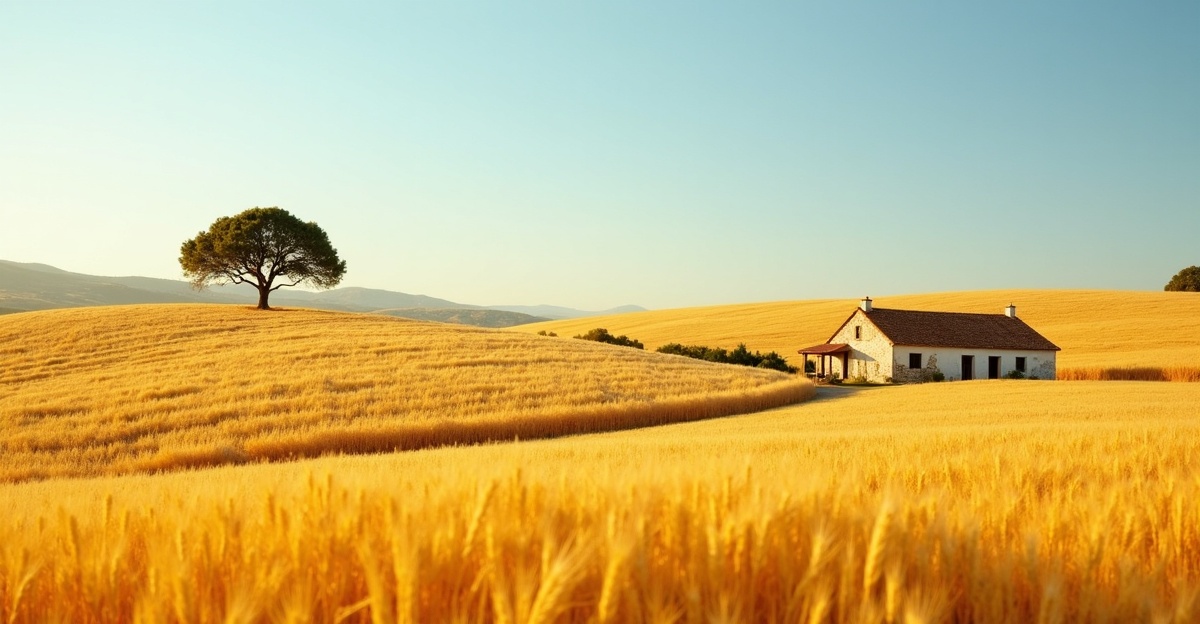
I spent three weeks driving through rural Portugal a few years ago, alone, with a loose plan and a willingness to stop whenever something looked interesting. It remains one of the best trips I’ve taken anywhere.
I ate at a roadside tasca in the Alentejo where the menu was handwritten on a piece of cardboard and the wine came in an earthenware jug and I was the only customer who hadn’t been eating there for forty years. I walked through the Douro Valley in October when the vine terraces were turning gold and the smell of fermenting grapes came through the car window. I arrived in Marvão at dusk and stood on a 9th-century castle wall watching the Spanish plain turn purple.
The Portugal countryside is one of Europe’s genuinely undervalued travel experiences. This is how to find the best of it.
BLOCK_0
Why Rural Portugal Is Worth the Detour
The honest answer is that Portugal’s countryside contains things that don’t exist at the same quality or abundance anywhere else in Western Europe: an intact rural culture, extraordinary agricultural landscapes, village architecture that hasn’t been sanitised for tourism, and food that is rooted in local geography in ways that disappear when a region develops economically.
This won’t last indefinitely. The Alentejo has been discovered; Airbnb has arrived in the Douro Valley; the more beautiful villages are beginning to attract weekenders from Lisbon and Porto. But the rural interior is large enough and stubborn enough that it still holds more than it has lost.
The Douro Valley: Portugal’s Most Dramatic Landscape
The Douro Valley is UNESCO World Heritage listed and it earns the designation. The terraced vineyards carved into impossibly steep schist hillsides along the Douro river are the result of centuries of human effort on terrain that most agriculture would consider impossible. The result is one of the most dramatic working landscapes in the world.
The best way to see it is to drive the road along the river from Peso da Régua eastward toward Pinhão and the Douro Superior. Stop at every miradouro (viewpoint). Drive a few kilometres into the hills on the smaller roads and you’ll find quintas with tasting rooms, villages where the main industry is wine, and the kind of views that make you understand why people have been willing to do this work for so long.
October and November are the most beautiful months — the harvest is complete but the leaves are still on the vines, turning gold and russet against the schist stone. The harvest itself (September-October) brings activity to otherwise quiet quintas and you can sometimes watch the vendimia process.
The train from Porto to Pinhão along the Douro is one of the most beautiful rail journeys in Europe. The line hugs the river for three hours and the views are extraordinary. Take it one way and drive back, or take it both ways if you can.
The Alentejo: Slow Travel, Big Skies
The Alentejo is Portugal’s largest region and its quietest. A vast plain of cork oak, holm oak, wheat, and olive, broken by whitewashed villages and medieval castle towns. The skies here are enormous in a way that feels almost disproportionate — there’s nothing to interrupt the horizon for kilometres in any direction.
This is where Portuguese rural culture has survived most intact. The villages — many with populations under 500 — maintain traditions of communal work, religious festival, and local food production that have disappeared from most of rural Europe. The bread in the bakeries is made from local wheat. The olive oil in the restaurants is from local trees. The pork is from the black Iberian pigs that root through the cork oak forests.
Évora is the Alentejo’s capital and one of the finest medieval cities in Iberia — Roman temple, Gothic cathedral, charming whitewashed streets, all functioning as a living city rather than a preserved relic. Use it as a base for exploring the region.
Monsaraz is a fortified village on a hilltop above the Alqueva reservoir, with streets that are largely unchanged since the 17th century. Fewer than 200 people live inside the walls. The views over the reservoir and the Spanish plain are extraordinary.
The megalithic monuments of the Alentejo are the least-known and most remarkable prehistoric structures in Western Europe. The Cromeleque dos Almendres, outside Évora, is a stone circle of 95 megaliths older than Stonehenge. The Anta Grande do Zambujeiro nearby is the largest megalithic tomb in Iberia. You can visit both in a morning with almost no other visitors present.
Northern Portugal: Minho and Trás-os-Montes
The north of Portugal is a different country from the Alentejo: greener, wetter, more Celtic in character, with a landscape of dense forests, river valleys, granite villages, and mountains that catch Atlantic weather systems for weeks at a time.
The Peneda-Gerês National Park is Portugal’s only national park and one of the finest wild landscapes in the Iberian Peninsula. The mountains here reach 1,500 metres and support wolf, roe deer, golden eagle, and one of the best wildflower displays in the country in late spring. The villages inside the park — some only accessible on foot — maintain granite architecture and agricultural practices that are centuries old.
Trás-os-Montes — literally “beyond the mountains” — is the northeast corner of Portugal and arguably its most isolated region. This is schist and granite country, with deep river gorges, chestnut forests, and an almost complete absence of tourist infrastructure. The food here is extraordinary: fumeiro (smoked meats), presunto (dry-cured ham), alheiras (bread-and-meat sausages created during the Inquisition), and a range of local cheeses that never make it to Lisbon markets.
The Algarve Interior: The Part Nobody Goes To
Everyone knows the Algarve coast. Almost nobody knows the Algarve interior — the Serra do Caldeirão and Serra de Monchique, twenty kilometres from the beach strip, where cork oak forests, small farms, and whitewashed villages exist in complete contrast to the coastal holiday infrastructure.
Monchique is a spa town in the mountains above Portimão with thermal springs, excellent smoked sausage, and views over the coast that put the coastal viewpoints to shame. The road up from Portimão through the eucalyptus and cork oak forest is beautiful.
The whole interior is excellent walking country — gentle hills, good paths, and the same clarity of light that makes the coast famous but without the crowds.
Agritourism and Rural Stays
Staying in a quinta — a traditional Portuguese farm estate — is one of the best ways to experience the countryside. The Turismo Rural category covers everything from working wine farms with guestrooms to converted manor houses offering full board and excursions.
In the Douro Valley, several quintas combine accommodation with winery visits and harvest activities. In the Alentejo, rural estates offer riding, walking, and the kind of genuinely quiet that you forget is available in Europe.
The Casas Brancas network and Turismo de Portugal’s rural accommodation directory are the best places to search. Book well ahead in May and during the October harvest period.
Practical Advice for a Rural Portugal Trip
Rent a car. There is no alternative for the Alentejo and Trás-os-Montes. The Douro has the train to Pinhão; beyond that, driving is the only option.
Learn a few phrases of Portuguese. English is rare in rural areas. “Tem mesa?” (Do you have a table?), “Quero a conta” (I’d like the bill), and “Onde fica…?” (Where is…?) will take you a long way.
Don’t rely on Google Maps for small roads. The OSM-based apps (Maps.me, OsmAnd) are better for rural Portugal. Google Maps occasionally routes you through roads that require a higher clearance than a rental hatchback has.
Eat where locals eat. The distinction between a restaurant for tourists and a tasca for locals is usually immediately visible. If the menu has photos, walk past. If the wine comes in a jug and nobody speaks English, sit down.
BLOCK_1
Frequently Asked Questions About Portugal Countryside
What is the best rural region in Portugal?
This depends entirely on what you’re looking for. For dramatic scenery, the Douro Valley is unmatched. For intact rural culture and food, the Alentejo. For wild nature and mountains, Peneda-Gerês. For an easy introduction from Lisbon, the Serra da Arrábida. My personal preference is the Alentejo in spring (April-May) when the wildflowers are out and the landscape is green before the summer drought.
When is the best time to visit the Portuguese countryside?
Spring (April-May) is consistently the best season: wildflowers, green landscapes, mild temperatures, and shoulder-season prices. Autumn (September-October) is excellent for the Douro harvest and the Alentejo vintage. Summer is hot in the Alentejo (regularly above 40°C in July-August) but fine in the northern mountains.
Can you do a rural Portugal trip without a car?
Partially. The train from Porto to Pinhão covers the Douro Valley beautifully. Buses reach Évora from Lisbon. But the most interesting rural Portugal — the small villages, the quintas, the hidden valleys — requires a car. Renting for the rural section of a trip and using train/bus for city portions is the most practical approach.
Is agritourism expensive in Portugal?
Rural accommodation in Portugal varies widely. Working farm stays with rooms start from €60-80 per night in many areas. High-end converted manor houses can reach €200+ per night. Compared to equivalent rural accommodation in France or Italy, Portugal is generally better value at every price point.
What should I eat in rural Portugal?
The Alentejo specialises in pork dishes (black Iberian pig), hearty bread soups (açordas, migas), and excellent cheeses including queijo de évora and queijo de serpa. The north is famous for smoked meats and the alheira sausage. The Douro Valley produces extraordinary olive oil alongside its wines. Ask for the dish of the day in any village tasca — it will be whatever was available locally that morning.
BLOCK_2
BLOCK_3
BLOCK_4